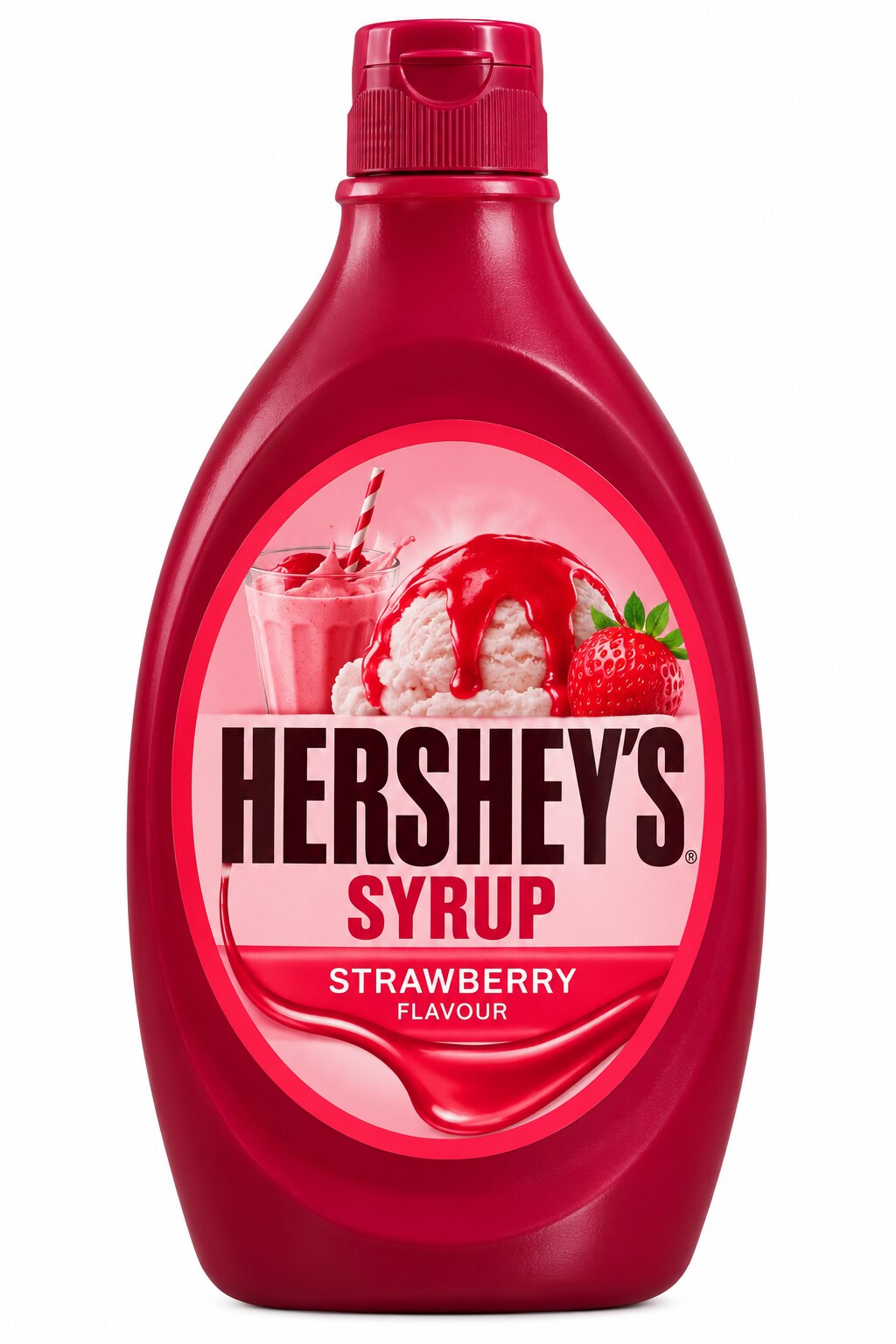
A topping syrup does not behave like a neutral cake soak, fruit purée, or concentrated bakery flavour, so the same dose cannot work across every recipe. By the end, you will have practical starting quantities, application methods, holding checks, and purchasing criteria for using the syrup consistently in a Chennai bakery.
Key takeaways
- Use measured syrup in drinks, waffles and plated desserts for repeatable service.
- Reduce other liquid when adding syrup to cake, cream or filling formulas.
- Store and deliver syrup with heat, humidity and seal checks in mind.
- Compare batch details, seal, shelf life and food-business documentation before buying.
Match the syrup application to the bakery product
Milkshakes, flavoured milk, sundaes, waffles, pancakes, dessert cups and cheesecake plates suit Hershey Strawberry Syrup best because you can control the amount at service. Use it as a flavouring and topping syrup, not as proof that a product contains substantial strawberry fruit. Match the menu wording to the recipe.
For hershey strawberry syrup applications in chennai, start with a small batch and adjust for sweetness, colour and strawberry intensity:
| Product | Application | Starting test dose |
|---|---|---|
| Sponge cake layer | Brush or spray, preferably blended with existing simple syrup | 10–15 ml per 20 cm layer |
| Cupcake filling | Pipe into a cored centre | 2–3 ml per cupcake |
| Whipped cream | Fold in after whipping | 5 ml per 240 ml cream |
| Buttercream | Beat in gradually | 5 ml per 250 g buttercream |
| Cheesecake plate | Drizzle beside or over the slice | 5–10 ml per serving |
| Milkshake or flavoured milk | Blend with the chilled drink | 15 ml per 300 ml |
| Waffle or pancake | Drizzle after cooking | 5–10 ml per serving |
| Dessert cup or sundae | Layer or finish at service | 5–10 ml per portion |
These hershey strawberry syrup applications should be tested after chilling and, for cake, after several hours of holding. Too much syrup can make sponge sticky, loosen whipped cream or cause colour streaking. Record the dose that gives consistent customer portions before scaling up.
Control moisture and stability in cakes, cream and fillings
Keep the syrup as a measured flavour addition, not the main liquid in your formula. Excess water and sugar can make sponge sticky, loosen cream and leave cold fillings unable to hold a clean cut.
Start production trials at these rates, then compare texture after refrigeration:
- Cake layers: Mix 10–15 g syrup into the existing simple syrup for each 20 cm sponge layer. Brush or spray lightly; do not soak the layer with undiluted syrup.
- Cupcakes: Pipe 3–5 g into the centre after baking. Seal the opening with buttercream so the filling does not migrate into the crumb.
- Whipped cream: Add 5–10 g per 250 g cream while mixing. Stop when the cream holds peaks, then refrigerate for two hours and test piping stability.
- Buttercream: Blend 5–10 g per 250 g finished buttercream. Add it gradually; excess liquid can cause sliding layers and soft borders.
- Cheesecake: Drizzle 5–10 g per serving over a set slice or plate. Keep the syrup on the surface rather than mixing it through the cheesecake batter.
- Cold fillings: Add 10–15 g per 500 g pastry cream, mousse or cream cheese filling. Pair it with the recipe’s existing stabiliser because syrup does not supply the fruit solids or setting strength of purée or reduction.
For strawberry syrups for bakeries, record the exact dose, filling temperature and holding time. Refrigerate filled cakes before dispatch and reject any trial that becomes wet, weeps or loses its piping shape.
Standardise beverages, waffles and plated desserts
Use a weighed dose rather than free-pouring: it keeps sweetness, flavour and food cost consistent. For a 300 ml milkshake, test 20–30 g of syrup; for 250 ml flavoured milk, test 10–15 g, then adjust against your milk’s sweetness. Blend the syrup with the liquid before adding ice cream or ice.
- Brush sponge layers with a measured 10–20 g per 20 cm layer when you need light strawberry flavour and softness. Stop before the crumb looks glossy or feels sticky.
- Drizzle waffles and pancakes after cooking, starting with 10–15 g per serving. Add it at service so the surface stays visible and the pastry does not soften during holding.
- Fold 10–15 g into 250 g of whipped cream for a flavoured cream component. Add it in a thin stream after soft peaks form; excess syrup can loosen the cream.
- Pipe the cream, not the syrup, when you need rosettes or borders. Standalone syrup spreads and will not hold a defined shape.
- Layer dessert cups with thin syrup lines between ice cream, cake, fruit or cream. Keep syrup away from a crisp biscuit base until service.
- Dilute the syrup into milk for flavoured milk, or into a small amount of cream for a plated-dessert sauce. Do not dilute with water unless the recipe allows weaker flavour and thinner body.
For cheesecake plates and sundaes, drizzle immediately before serving. These are practical Hershey strawberry syrup applications; record the final grams per portion after a tasting and holding test.
Adapt handling for Chennai heat, humidity and delivery
Chennai heat changes service risk quickly: keep an opened bottle away from ovens, hot counters and direct sunlight, and follow the label for unopened and after-opening storage. Do not assume a syrup is safe at room temperature because it pours easily.
For a bakery syrup in Chennai, move stock into the recommended storage area as soon as delivery arrives. Refrigerate the opened bottle when the label instructs you to, then allow only the quantity needed for a short service period to reach the workstation.
- Use a clean, dry pump, squeeze bottle or spoon for every portion. Water, cream residue and crumbs inside the bottle can introduce contamination and spoil the remaining syrup.
- Wipe the nozzle after service, close the cap firmly and never return poured syrup to the original bottle.
- Keep only a small working bottle at the display counter; store the reserve bottle under its labelled conditions.
- Set a written discard time for the working bottle, based on the label and your food-safety procedure. Do not leave it beside a hot display case throughout the day.
- Refrigerate finished cream, cheesecake, filled cakes and other perishable applications, then record preparation time and follow your validated holding limit.
- During delivery, protect bottles from sun and vehicle heat. On receipt, check the seal, leakage, bottle swelling and batch or expiry marking before placing them into storage.
Run a warm-weather service trial: check flow, colour, separation and taste after refrigerated holding and after the planned display period. A topping that stays stable on ice cream can fail in cream or cake service.
Validate the product before choosing a Chennai supplier
Approve a trial lot only after it passes your actual bakery process, not because it works as an ice-cream topping. Test taste after baking and chilling, colour migration, separation in cream, sponge-soak absorption, bottle dispensing, refrigerated holding, and consistency across customer portions.
| Check | Pass condition | Reject or investigate when |
|---|---|---|
| Taste and colour | Strawberry character and colour remain acceptable after baking or chilling | Flavour fades, turns harsh, or stains cream unevenly |
| Cream and fillings | No weeping, curdling, or separation after 24 hours refrigerated | Whipped cream collapses or buttercream loosens |
| Sponge application | Trial rate gives a moist crumb without stickiness | Layers become wet, gummy, or difficult to stack |
| Dispensing | Bottle delivers a repeatable stream without clogging | First and last portions differ noticeably |
| Label and traceability | Exact local ingredient list, allergen declaration, pack size, batch and expiry are visible | The listing shows an overseas formulation or missing batch details |
Record the approved grams or millilitres per cake layer, cream batch, beverage, and dessert portion. Keep a retained sample from the approved batch, because colour and flavour can vary between formulations or pack sizes. Do not describe a flavoured product as containing substantial strawberry fruit unless the recipe actually includes it.
For a bakery syrup in Chennai, ask the supplier to confirm current stock, manufacturer and market of origin, minimum order quantity, lead time, invoice, storage directions, and replacement terms for leakage or damage.
If comparing a hershey syrup supplier in chennai, ask Venmart for these details in writing and check whether repeat orders can be filled from traceable batches.
Related product
 | Bakery offers a deliciously sweet and fruity flavor, perfect for drizzling over ice cream, pancakes, waffles, or milk. View product → |
Frequently asked questions
Which bakery products suit Hershey Strawberry Syrup best?
Use it for milkshakes, flavoured milk, sundaes, waffles, pancakes, dessert cups and cheesecake plates where you can measure the amount at service.
How do you control moisture when adding strawberry syrup to bakery products?
Measure the syrup as part of the formula and reduce another liquid when necessary, especially in cakes, creams and fillings. Match the recipe to the syrup’s liquid contribution.
How can bakeries standardise strawberry syrup in beverages and desserts?
Set a measured portion for each menu item, use the same dispensing method, and record the syrup quantity in the recipe or assembly sheet.
What should you check before choosing a Hershey syrup supplier in Chennai?
Inspect the seal, batch or lot identification, best-before date, storage instructions, label details and business purchase documentation before accepting stock.
Keywords