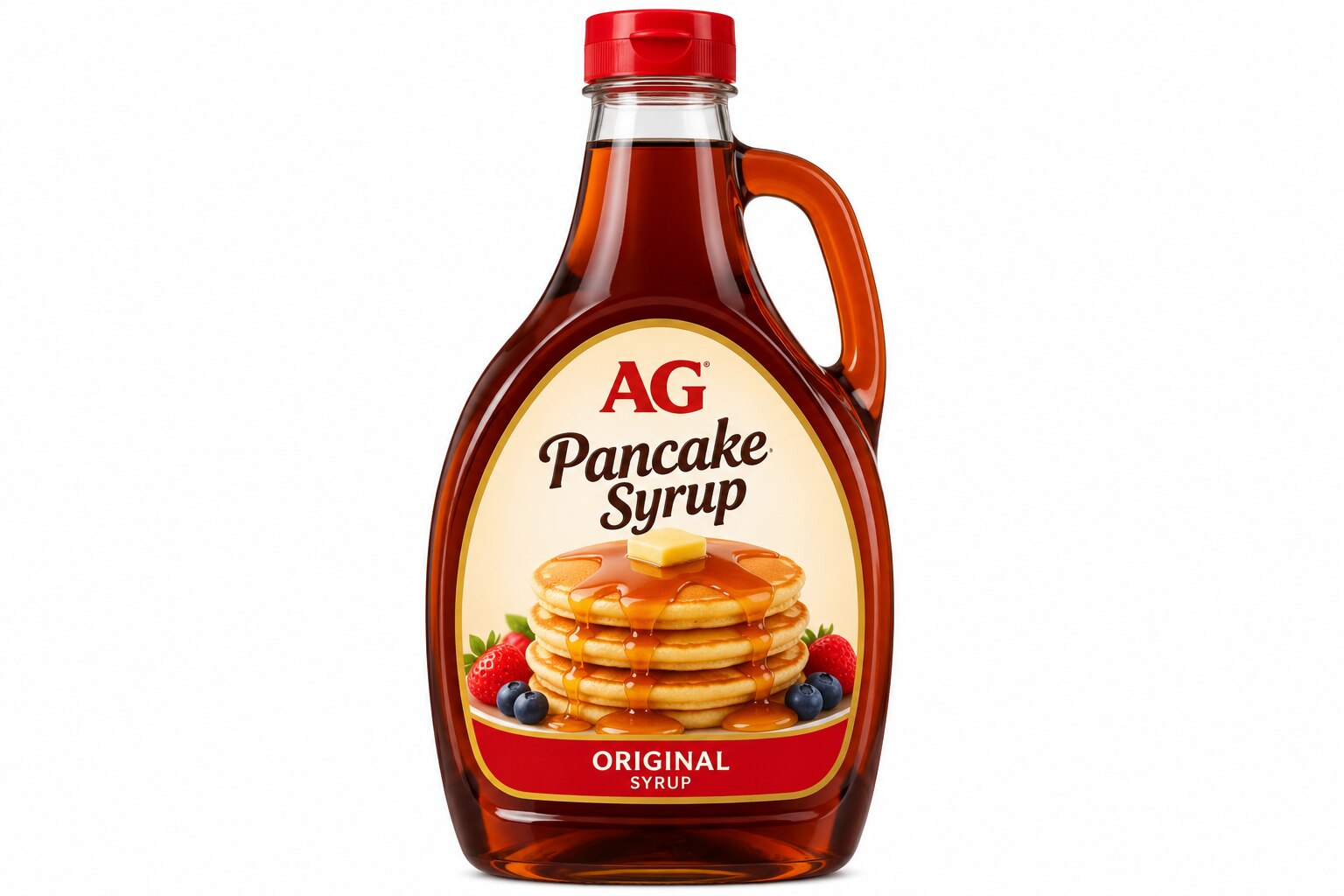
A syrup topping becomes inconsistent when each shift uses a different bottle, pour, portion or storage routine. By weighing servings, calibrating dispensing equipment and recording pack usage, you can make plated results repeatable while forecasting when the next 355 ml pack is needed.
Key takeaways
- Set separate syrup targets for pancakes, waffles and dessert plates.
- Weigh each dispenser output before service and record the result.
- Write syrup brand, portion, coverage and storage rules into the shift guide.
- Use the 355 ml pack only when demand supports frequent replenishment.
Set a weighed syrup portion for every plate
Set a house portion before service: start with 25 g of AG Pancake Syrup for one pancake stack, 20 g for one waffle, and 15 g for a dessert plate. Adjust these targets after tasting for sweetness, coverage and food cost, then use the approved figure for all pancake syrup toppings.
- Place the serving plate or a small dispensing cup on a scale and tare it.
- Dispense syrup until the scale reaches the target weight, then record the result on the prep sheet.
- Weigh 10 normal portions from the bottle, pump or nozzle and calculate their mean weight.
- Set an operating range around that mean, such as ±10%, and retrain staff when portions fall outside it.
- Never dilute the syrup to stretch yield. Added water changes viscosity, sweetness, water activity and the way the topping runs across hot food.
A squeeze bottle is repeatable only after calibration; staff cannot control a portion by counting squeezes. For restaurant dessert toppings, keep the bottle opening or pump head away from plates and utensils, and discard syrup touched by crumbs, cream or fruit juice.
Forecast usage from measured grams, not the 355 ml label alone. Divide the bottle’s verified usable weight by the approved grams per plate, then multiply daily plate volume by the target weight. Bottle geometry, wall residue and dispensing method reduce usable yield, so record actual yield during a trial service.
Calibrate the bottle, pump or nozzle before service
A calibrated pump with a fixed-dose head usually gives the most consistent portion for AG pancake syrup toppings for restaurants in Chennai. It beats informal squeeze counts because each stroke has a defined target, but temperature, air entry, worn seals and a blocked valve can still change the grams delivered.
| Method | Consistency | Verification |
|---|---|---|
| Metered pump | Highest when maintained | Weigh repeated strokes |
| Squeeze bottle with nozzle | Moderate; pressure varies by operator | Weigh repeated squeezes |
| Ladle or measured cup | Good for batch service | Weigh each filled measure |
Calibrate every bottle, pump or nozzle combination using the syrup at its normal service temperature. Do not compare a cold morning sample with a warm lunch-service sample.
- Tare a container on a scale accurate to at least 1 gram.
- Dispense 10 normal pump strokes, or 10 normal squeezes, into the container.
- Record the total weight and divide by 10 to find the mean output per dispense.
- Repeat the test after refilling, changing the nozzle, or finding a blocked valve.
- Approve the dispenser only when its mean matches the restaurant’s specified gram portion and individual dispenses stay within the chosen operating range.
Keep the pump head or nozzle away from pancakes, cream and fruit. Clean it at the frequency stated on the product or equipment instructions; discard syrup touched by crumbs or used utensils, and never dilute it to correct slow flow. A dilution changes viscosity and makes the calibration invalid.
Write a topping specification that every shift can follow
Record the result as a one-page visual standard kept at every dispensing station. Photograph one approved plate from above and at a 45-degree angle, then attach the exact serving measure already approved for that menu item.
- Drizzle pattern: specify the number of lines, zigzags or loops, their direction, and the spacing. For example, use three left-to-right zigzags across the top pancake, with no free-pouring.
- Plate position: mark where the syrup starts and ends. State whether it sits on the centre of the stack, crosses the waffle grooves, or forms a ring 2 cm inside the plate rim.
- Temperature: record the target temperature at dispensing and the permitted range, such as 20–25°C if that range has passed your product test. Measure syrup in the dispensing bottle, not in the storage area.
- Appearance: describe the approved colour, gloss, flow and coverage. Reject a serving with watery separation, crystals, unusual odour, uneven pooling or a dry section where the specification requires coverage.
Add a simple pass/fail photo to the shift checklist. A supervisor can compare one plate from each shift against the reference before service; this catches a changed nozzle, colder syrup or a different hand position before customers see inconsistent pancake syrup toppings.
Keep the same wording, image, temperature range and plate for every branch. Do not allow staff to substitute a similar syrup or dilute it, because both changes alter the look and pour.
Store and handle syrup for Chennai service conditions
Keep AG Pancake Syrup in Chennai according to the product label’s storage and after-opening instructions, away from direct sunlight and heat. A bottle beside a griddle, in a hot storeroom, or inside a delivery vehicle can develop more variable flow, while Chennai’s humidity increases moisture and contamination around caps and pump heads.
Protect each pack with these controls:
- Store it away from griddles, ovens, windows, wet-cleaning areas and strong-smelling ingredients.
- Keep the cap, pump head or nozzle off counters and other food-contact surfaces.
- Wipe external moisture and syrup residue from the closure before returning the container to storage.
- Use one clean dispensing method and follow a written cleaning frequency; do not introduce used utensils into the bottle.
- Discard syrup touched by crumbs, cream, fruit juice or a used spoon. Do not pour it back into the original pack.
Never dilute the syrup to extend yield. Added water changes viscosity, sweetness, water activity and microbial stability, so the topping runs differently over hot pancakes and portions stop matching the specification. Do not thin a thick pour by guesswork; check storage conditions and the label before changing equipment or process.
For restaurant dessert toppings, receive only packs with an intact seal, readable lot identification, best-before information and declared net quantity. Record the product name and transport condition, then reject a leaking or heat-damaged pack. These checks help keep ag pancake syrup in chennai consistent across shifts without creating handling rules the label does not support.
Match the 355 ml pack to demand and procurement controls
A 355 ml pack suits a low-volume café or a cloud kitchen more readily than a busy buffet, but only after you measure actual yield. Treat AG Pancake Syrup 355 ml as a pack-size specification, not a promise of plated servings: residue on bottle walls and dispensing losses reduce usable quantity.
| Outlet type | Fit | Procurement approach |
|---|---|---|
| Low-volume café | Good for limited daily orders and flavour testing | Keep one unopened replacement pack |
| Cloud kitchen | Good when demand is predictable by menu item | Replenish against portions sold, not bottles opened |
| High-volume restaurant | Risky as the sole pack format | Set a minimum stock level and order before service risk appears |
| Buffet | Poor for continuous self-service | Use controlled refills and record each refill |
Forecast weekly demand by multiplying expected plates by the approved gram portion, then dividing by measured grams dispensed from one pack. As a starting check, 30 g per serving gives about 11.8 nominal portions and 40 g gives about 8.9; weigh full and empty packs to establish your outlet’s real yield.
Do not dilute the syrup: dilution changes viscosity, sweetness, water activity and microbial stability, then disrupts portion control on hot pancakes.
Specify every replenishment as the same product name, 355 ml pack, declared net quantity, lot identification, best-before date, intact seal and transport condition. Venmart can help Chennai buyers compare those details when sourcing AG Pancake Syrup in Chennai.
Record lead time, average daily usage and two service days of safety stock for ag pancake syrup toppings for restaurants in Chennai.
Related product
 | Bakery AG Pancake Syrup (355 ML) is a deliciously sweet syrup perfect for drizzling over pancakes, waffles, and French toast. View product → |
Frequently asked questions
How much AG Pancake Syrup should a restaurant use per serving?
Start with 25 g for a pancake stack, 20 g for a waffle and 15 g for a dessert plate. Taste the result, check coverage and food cost, then approve one target for each dish.
How do restaurants calibrate a pancake syrup bottle, pump or nozzle?
Weigh several outputs from the cleaned dispenser before service, compare the average with the approved portion and adjust the pump stroke or nozzle until it delivers the target weight.
What should a restaurant topping specification include?
Record the syrup name, portion weight, application point, plating pattern, dispenser setting, date opened and staff sign-off so every shift follows the same method.
How should AG Pancake Syrup be stored during Chennai service?
Keep the sealed pack in a clean, dry place away from direct heat and sunlight. Wipe the cap and nozzle, prevent cross-contact and follow the pack label after opening.
When does the AG Pancake Syrup 355 ml pack suit restaurant demand?
Choose the 355 ml pack when expected service volume allows the pack to be used within its labelled opening guidance. Compare daily demand, replenishment frequency and storage discipline before ordering.
Keywords