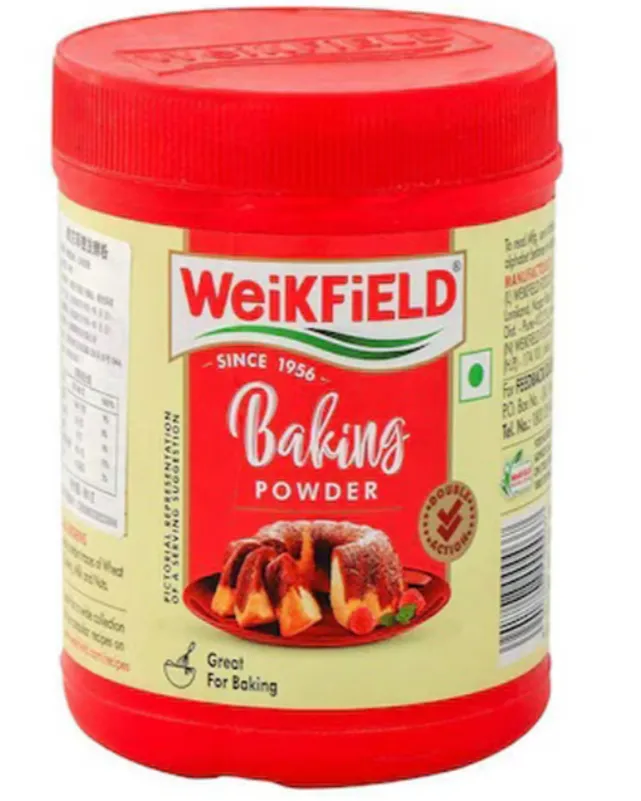
Few ingredients demonstrate the importance of precision in baking as clearly as Baking Powder. It may represent only a small proportion of a recipe, yet incorrect quantity, poor storage, or uneven mixing can noticeably affect the finished product.
For bakeries, home bakers, cafés, and dessert businesses in Pallavaram, Chennai, Tamil Nadu, understanding baking powder is useful for producing cakes, muffins, and other baked goods more consistently.
What Does Baking Powder Do?
Baking powder is a chemical leavening ingredient. In suitable recipes, it helps generate gas within the batter or dough, contributing to expansion during preparation and baking.
That expansion supports the desired volume and texture of products such as
- Cakes
- Muffins
- Cupcakes
- Selected cookies
- Quick breads
- Certain bakery snacks
The amount required depends on the complete recipe.
More Baking Powder Does Not Mean More Rise
This is one of the most important principles for new bakers.
Adding extra baking powder in an attempt to produce a taller cake can create undesirable results. Excessive leavening can contribute to an unstable structure, irregular crumb, or unwanted flavour.
Too little may produce a dense result.
The correct approach is to follow a tested formulation and weigh ingredients accurately.
Distribution Through the Flour Matters
Small ingredients need to be distributed evenly.
If baking powder is concentrated in one part of the mixture, sections of the finished product may behave differently. Combining dry ingredients thoroughly before incorporating them into the main batter can support more even distribution.
Commercial bakeries should use consistent mixing procedures rather than relying on individual habits.
Storage Can Affect Performance
Bakery ingredients should be stored according to the manufacturer's directions and protected from conditions that can reduce quality.
For baking powder, moisture exposure is particularly undesirable.
In Chennai's humid climate, keeping dry ingredients properly sealed can be important for maintaining dependable production conditions. Containers should be clean, dry, clearly identified, and rotated according to appropriate inventory practices.
Check the Entire Recipe When a Cake Fails
When a cake does not rise properly, baking powder often receives immediate blame. But several other factors may be involved.
Possible causes include
- Incorrect ingredient measurement
- Wrong pan size
- Batter left standing too long
- Mixing errors
- Incorrect oven temperature
- Poor oven calibration
- Recipe imbalance
- Premature opening of the oven
- Inappropriate baking time
Troubleshooting should therefore consider the complete process.
Weighing Improves Repeatability
Volume measures can be convenient for home use, but commercial production benefits from weighing ingredients wherever practical.
A documented recipe gives staff a common production standard.
If a bakery produces 50 batches in a week, even small measurement inconsistencies can create noticeable variation in finished goods.
Keep Batch Records
Growing bakery businesses can benefit from recording unusual outcomes.
If a cake suddenly behaves differently, note the ingredient batch, mixing conditions, baking time, oven settings, and any recipe changes.
These records can help identify patterns instead of relying on memory.
Choose Ingredients According to Production Needs
Buying decisions should consider pack size, expected consumption, storage capability, recipe suitability, and supplier reliability.
An unnecessarily large pack may not be practical for a home baker, while a commercial bakery may need quantities aligned with regular production.
Venmart supplies baking essentials and food ingredients to professional and home baking customers in Chennai. For customers around Pallavaram, choosing baking powder in suitable pack sizes and following disciplined storage and recipe practices can support more predictable baking.
Reliable results rarely depend on one ingredient alone. Accurate formulation, correct handling, controlled baking conditions, and consistent raw materials work together to produce the texture and rise customers expect.
Keywords