
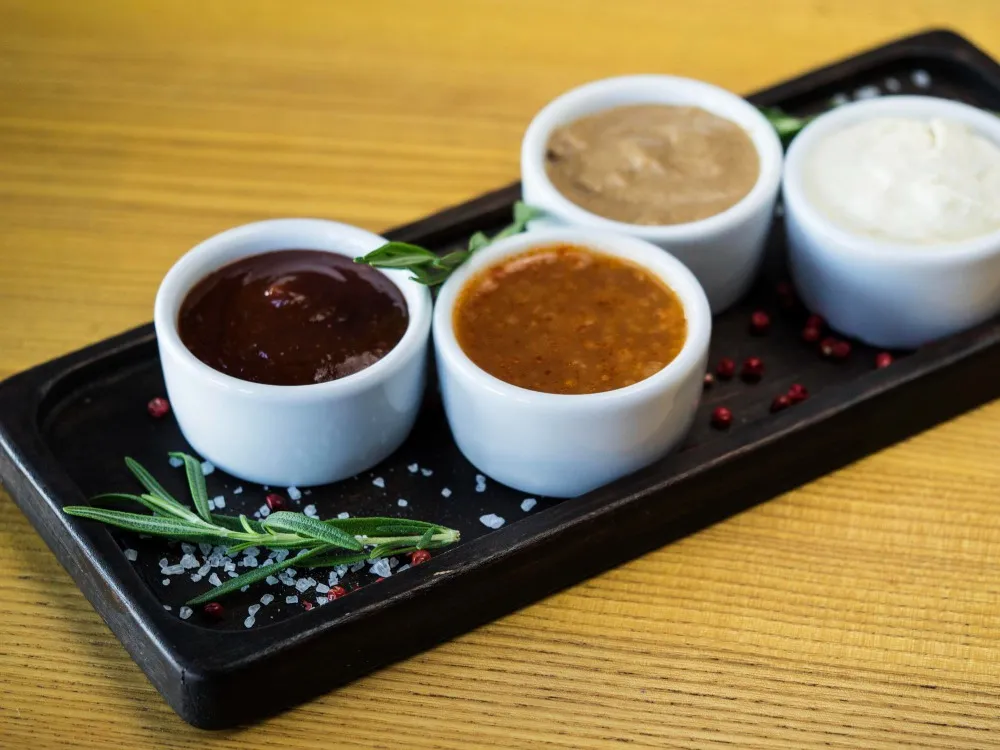
A well-selected Sauce can do far more than add flavour. It can establish a signature menu profile, improve consistency between batches, simplify kitchen preparation, and provide customers with a familiar taste every time they order.
For cafés, restaurants, cloud kitchens, and quick-service food businesses in Anna Nagar, Chennai, Tamil Nadu, sauce selection should therefore be approached as an ingredient decision rather than merely a condiment purchase.
Start With the Menu Application
Different menu items require different sauce characteristics.
A sauce used as a burger spread needs different consistency from one used for dipping. A pizza drizzle should behave differently from a marinade, while a pasta preparation may require a product that blends smoothly during cooking.
Commercial kitchens commonly use sauces for
- Burgers and sandwiches
- Wraps and rolls
- Pasta preparations
- Starters
- Fries and snacks
- Marinades
- Grilled foods
- Dips
- Plating and garnishing
Identifying the intended application helps narrow the selection considerably.
Flavour Should Complement the Core Ingredient
An intensely flavoured sauce can overwhelm a delicate dish. Conversely, a mild sauce may disappear when paired with strongly seasoned ingredients.
Evaluate the complete recipe rather than tasting the sauce in isolation.
For example, consider how the sauce interacts with bread, vegetables, cheese, protein, seasoning, and other condiments in a sandwich. The goal is a balanced finished product rather than simply choosing the strongest flavour.
Consistency Influences Kitchen Performance
Texture matters in commercial kitchens.
A very thin product may cause leakage in takeaway packaging. An excessively thick one can be difficult to portion or spread evenly. For dips, the sauce should generally cling appropriately to the food without becoming inconvenient to serve.
Consistency also affects presentation when sauces are used for drizzling.
Standardised Portioning Helps Control Costs
Small differences in sauce quantity can become significant when hundreds of portions are served.
Suppose one kitchen employee uses 20 grams per serving while another uses 35 grams. The recipe may taste different, and ingredient consumption becomes difficult to forecast.
A standard serving quantity can improve
- Recipe consistency
- Food cost calculation
- Inventory planning
- Purchasing accuracy
- Customer experience
Squeeze bottles, measured ladles, pumps, or portion cups may be useful depending on the operation.
Check Packaging Before Buying
Large commercial packs can appear economical, but the lowest unit cost is not always the best choice.
A smaller café should consider how quickly an opened pack will be consumed. High-volume restaurants may benefit from larger formats, provided appropriate storage and handling practices are followed.
Always follow the manufacturer's storage instructions, including requirements after opening.
Test Before Adding a Sauce to the Menu
Before committing to regular purchasing, conduct a simple menu trial.
Prepare the actual dish using the intended serving quantity. Evaluate taste, mouthfeel, visual appeal, portion cost, handling, and performance during takeaway or delivery where relevant.
Cloud kitchens should pay particular attention to how the product behaves after transportation. A dish that performs well immediately after preparation may change during a 20- or 30-minute delivery journey.
Consider Menu Versatility
A sauce that works across several menu items may simplify inventory.
For example, one suitable sauce might be usable in sandwiches, wraps, starters, and selected snack preparations. However, versatility should not come at the expense of menu identity.
Venmart serves food businesses seeking bakery ingredients and food preparation essentials in Chennai. For operators around Anna Nagar, selecting sauces according to application, volume, packaging, and flavour profile can make purchasing more systematic.
The right sauce supports more than taste. It can help a kitchen maintain consistency, streamline preparation, and build dishes that customers recognise each time they return.
Keywords